• Skip to primary navigation
  • Skip to main content
  • Skip to primary sidebar

Pagibig Financing

Pag-IBIG Fund, Housing Loans, Mortgage, Membership, Foreclosures, etc

  • Home
  • FAQ
  • Marketplace
  • Contact Us
  • Subscribe

Foreclosure

Foreclosure Properties — To Buy Or Not To Buy? (Part 1 of 2)

by Pag-IBIG Financing Admin

In one of the past articles posted on this website, I warned first time Pag-IBIG Home buyers to avoid buying foreclosure properties or even those which are for assume. I reasoned that many of these properties are so problematic to the point of being useless.

Well, they are not really useless if you know what you are doing and you want to take on a little challenge in the hope of reaping the rewards that lie ahead.

Caution:The above paragraph is only for savvy real estate investors. If you are a first time buyer, I still maintain that you should avoid it altogether. When buying your first home, you should treat the whole process as though you have limited financial resources and that you have to make sure you won’t regret doing so later on. As I’ve said many of these properties are inherently problematic that they’re not even worth checking.

This article is an attempt to elaborate on that point a little further.

Recently, we received a letter from one of the website visitors stating her problem with the foreclosure property she bought at Pag-IBIG. I want to share with the readers of this website a portion of that letter to illustrate the most common problem encountered by buyers who have bought Pag-IBIG foreclosed units. Please take note that I have intentionally removed the name and places mentioned in the original letter to keep her privacy protected.

Here goes…

…I’ve been a member of the Fund for almost 16 years now. In 2007, I purchased a foreclosed property in [place not mentioned]. We paid it in cash. To my aghast, the previous occupant refuses to leave the property despite several notices from your office [Pag-IBIG Branch not mentioned] to vacate the property. Your office here advises us to file a case against the previous occupant which we eagerly do so believing it will only be a couple of months and the property will be turn over to us. But until this day, we haven’t taken a hold of the house we legally bought at your office. We knew before paying the unit that Pag-Ibig will not participate in “driving out” whoever is occupying the house. Only that, justice is so slow paced. The counsel of the previous occupant believes that house conflicts of this kind should be settled first with the HLURB and that whatever is the decision of the RTC is immaterial. He cited the MAgna Carta for Homeowners. Natatakot po kami ng husband baka po matalo kami paano na po ung binayad namin sa pag-ibig. Malaki na po ang nagastos namin sa kasong ito. Sobra pa sa binayad namin sa pag-ibig.

The title is already transferred in our name as well as the tax declaration.

What is our chance of winning the case? May case ba na gaya sa amin na nanalo ang buyer ng foreclosed property nyo? …Thank you.
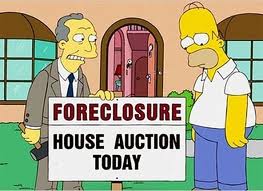
Pag-IBIG Fund Foreclosure HomeI don’t how you feel after reading that one, but the first time I read it, I already felt sorry for the buyer. Of course, I read it for several times more making sure that I understood the real problem the letter sender is facing.

It is very unfortunate that cases such as these are not readily available in the mainstream media. It maybe because it’s very shameful being victimized this way. Adding insult to the injury, the Pag-IBIG Fund can’t even assist buyers in successfully handling the case.

This is the first part of the series of articles on Pag-IBIG Foreclosure Properties. In the next article, I’ll show you some tips and traps of buying foreclosure properties from the Pag-IBIG Fund.

Update: Part 2 is now ready. Please read it here.

~~~

Foreclosure Properties — To Buy Or Not To Buy? is written by Carlos Velasco

Filed Under: Buying Tips Tagged With: Foreclose, Foreclosure

On Collateral And The Pag-IBIG Housing Loan

by Pag-IBIG Financing Admin

Can you imagine life without mortgage loans?

To say the least, only a very few families would be living in their own homes. The reality is, most people can’t really afford to pay Spot Cash on a piece of property. Even a 2-year interest-free, installment payment is still hard on the average family’s budget.

But thanks to financing programs like mortgage loans (or housing loans), many families now enjoy having a roof over their heads while still paying the property over a series of monthly payments on a longer term.

The concept is actually very simple. Given the appraised value of the property, a lending institution can assist the buyer in purchasing the property by financing part of the price. Normally, the lending company may shoulder up to 80% of the property’s price and the borrower should be able to raise the 20% cash down payment.

See also :

  • Fundamentals of Mortgage Loans
  • The Pag-IBIG Housing Loan Process

Pag-IBIG Member Benefits and Responsibilities

As a member of the Pag-IBIG Fund, one of the benefits you can enjoy as member is becoming eligible for Pag-IBIG Housing Loan and paying it in longer periods of up to 30 years.

One of the most important things you need to understand about Pag-IBIG Housing Loan, or any mortgage loan for that matter, is that, it is a secured form of financing. This means that when you sign a housing loan with Pag-IBIG, there are two points that you need to keep in mind:

  • You promise to repay loan on time as set in the agreement.
  • You put the property as collateral to backup your pledge.

The moment you fail to pay on the scheduled monthly amortization, that’s when the Foreclosure clock starts to tick.

It’s a very stressful event and you should do everything in your capacity to contact the Pag-IBIG Fund branch where you applied for the housing loan before it’s too late.

Collateral Requirement of Pag-IBIG Housing Loan

You should already know that Pag-IBIG Housing Loan is only applicable to residential types of properties; not commercial properties.

The collateral requirement of Pag-IBIG Home Loan is very simple: A clean Title (TCT/CCT) issued by the Registry of Deeds.

Important points to remember:

  • The tax on the real property must be updated.
  • The borrower is required to submit a copy of tax receipts.

Furthermore, the following properties / Titles are not acceptable as collateral:

  1. Free / Homestead / Miscellaneous Sales Patent Titles
  2. Properties with Encumbrances
  3. Properties with Liens

See the following related articles:

  • Income and Pag-IBIG Housing Loan Entitlement
  • Pag-IBIG Housing Loans And Foreclosures

Buyer, Beware

Take note of the above-mentioned list of “unacceptable collateral” because they are very important especially if you are buying from individual sellers; that is, not from developer corporations.

When buying a property, insist on getting a copy of the Title — (TCT for Lot, or CCT for condominium unit). Once you have it, verify its status at your local Registry of Deeds. Always avoid buying properties that belong to any of the three categories mentioned above.

Foreclosure properties are another type of properties you should avoid at all costs until you have educated yourself already on the whole idea. However, if you are not that confident yet, forget about all those money-making schemes they preach in Foreclosure Seminars. These properties are much more complicated and a much more painful investment than seminar experts would want to believe.

~~~

“On Collateral And The Pag-IBIG Housing Loan” is written by Carlos Velasco.

Filed Under: Buying Tips, Housing Loans, Real Estate Finance Tagged With: Collateral, Foreclosure, Mortage Loan, Mortgage, Pag-IBIG Housing Loan, Title

5 Great Tips For The First Time Pag-IBIG Home Buyers

by Pag-IBIG Financing Admin

This article is intended for the first-time home buyer who wanted to buy a house using Pag-IBIG Financing.

Maybe you are still single and you already wanted to get a house before getting married. (Well, this was the route that I followed.) Or, maybe you are newly wed and you decided that you want to live separately from your parents. Believe me, there’s no substitute to the feeling that you are living on your own home.

A Pag-IBIG starter home — your first home — may not be the most impressive home in town. That’s okay. Forget about the Joneses. Like your puppy love, don’t ever think that it will become your dream home. Rather, treat it as a nest egg that allows you to slowly build your investment (hedge against inflation) while literally having a roof over your head.

Buying your first home through Pag-IBIG is so easy if you take note of the following tips offered here.

Tip #1: Work With Your Real Estate Professional
By real estate professional, in this context, I’m referring to the real estate broker or agent who is directly selling the house.

House From The Up Movie -- A Nice Starter HomeYou may think that getting the assistance of a real estate agent will make the property more expensive. Whoever told you that must be very ignorant of the whole process.

Here’s what you should know: The real estate professional can’t change the selling price of the property that is owned by the Developer. That is, they can’t markup the price nor can they offer a discount. The selling price and discounts are completely dictated by the Developer’s Marketing Team and the agent can never, ever change that price.

Using a real estate professional right from the start saves you from a lot of headaches associated with the home purchase. For one, the guy is a good source of information such as the following:

  • The project
  • The property
  • The financing schemes
  • Special promotions and discounts
  • The materials used,
  • The move-in process

And if you are using Pag-IBIG Financing, your real estate agent should be able to help you cut through the bureaucracy in the Office.

Tip #2 : Buy A New House

Avoid foreclosure properties or properties that are for assume. Most of these properties are inherently problematic. You don’t want to find yourself catching someone else’s problem, do you?

Many foreclosed properties are so cheap you are tempted to jump on the deal immediately. Not so fast. This may be one of those cases where cheap could actually turn out to be very expensive due to probable renovations. If renovations are needed, we can point you towards reputable contractors like Art Construction.

As much as possible, make sure you are the first owner. Of course, as time goes, newer homes will become harder to find. If that’s the case, make sure that the Land Title is clean.

Tip #3 : Buy From A Legitimate Real Estate Developer

Never, ever deal with a fly-by-night real estate developer. But the crooks have a way of putting on the mask in such a way that you can’t detect the devil’s intentions. Here’s where common sense becomes a useful tool at your disposal.

At the very least, a legitimate Real Estate Developer:

  • Has complete Business Permits and Licenses to operate in that line of business.
  • Issues an Official Receipt from the Bureau of Internal Revenue.

Some good points to keep in mind:

  • Check the track record of the Developer – especially its past projects.
  • Make sure they are accredited by the Pag-IBIG Fund. (only if you intend to use Pag-IBIG Loan)
  • Check the License To Sell and Development Permit – they should have both.

Tip #4 : Make Sure You Have Your Finances In Order

Here’s a handy checklist:

  • You are currently an active Pag-IBIG member with at least 24 months contributions
  • Your employment history is impressive
  • You have enough salary/income to cover the monthly amortization

Related articles:

  • The Pag-IBIG Housing Loan Process
  • The Basics of Home Financing
  • Improve Your Chances of Getting A Loan

Tip #5 : Save Enough For The Down Payment

The greatest hurdle most real estates buyer ever faced is coming up with the down payment. Many are surprised when they find they don’t have enough cash to cover the outright cash payment required of them.

The down payment, sometimes called equity, is usually 10% to 30% of the selling price. And almost always, it is to be paid one-time about one month after placing the Reservation Fee. So one of the first problems you should think about is the amount of cash you need to raise for the down payment.

Down Payment Tip: Ask your real estate agent if you can defer the payment of the down payment to, say, 12 months. This should be easier on your pocket.

“5 Great Tips For The First Time Pag-IBIG Home Buyers” is written by Carlos Velasco.

Filed Under: Buying Tips, Tips and Traps Tagged With: For Assume, Forclose, Foreclosure, Income, Pag-IBIG Loan, Real Estate Agent, Real Estate Broker, Real Estate Developer, Requirements

Pag-IBIG Housing Loan Default and Foreclosure

by Pag-IBIG Financing Admin

Most real estate purchases and investments are made with the use of borrowed money; that is by mortgage loans.

In an ideal world, these mortgages are paid on time and are eventually fully paid including all the interest incurred by borrowing the money. But unforeseen circumstances do sometimes happen, which lead to loan defaults and, worst of all, mortgages being foreclosed.

Foreclosures are often painful on the part of the borrower and a hassle on the part of the lender. This is the reason why lenders are very strict in evaluating loan applications. It is not uncommon for lenders to ask for very detailed personal and financial information from their clients.

Why Loan Defaults Happen?

Given the fact that Housing Loan Default is something to be avoided, there are some reasons why they happen. Here are some common ones:

  • Personal and Financial Problems — the loss of a job, emergencies, calamities, or being assigned to another city.
  • Physical Flaws Of the Property — weak structure, dilapidated roads, flood-prone area, etc.
  • Legal Problems — land title disputes, marital problems

Loan Default Leads To Foreclosure

For regular Pag-IBIG Housing Loans, loan default happens when the borrower or any of his co-borrowers…

  • fails to pay three consecutive monthly amortizations
  • fails to pay monthly membership contributions
  • fails to comply other obligations of the loan

In the case of Pag-IBIG Rent-to-Own units, a default happens if you fail to pay three consecutive monthly rentals.

If the borrower defaults on a loan, the outstanding loan, accrued interest, penalties, fees and other charges become immediately due and demandable. Aside from that, Pag-IBIG also imposes that the “unpaid monthly payments shall continue to be charged with a penalty equivalent to 1/20 of 1% of the amount due for every day of delay.”

What To Do If Foreclosure Is Underway?

A foreclosure is a very stressful situation. Once you are at a point near that, knowing the options to take can greatly help.

If you find yourself unable to continue to make the scheduled payments on a mortgage loan, consider the following alternatives before it’s too late:

1. Sell the property and repay the loan. If you are lucky to have a friend or relative who has ready cash to pay for the property, this is the way to go.

2. Have someone assume the loan. Announcing to the whole world that you are in financial distress may help after all. Who knows, someone down there might be a good candidate and he could be interested in assuming your loan.

3. Restructure the loan. Discuss this with the lender; the Pag-IBIG Fund, in this context. A Loan Restructure might help reduce the payments temporarily.

4. Just let it be. That is, just allow the lender to continue with the foreclosure. Some properties really deserved to be foreclosed, most especially those that are really giving you a lot of headache instead of a roof over your head.

Prevent Foreclosure By Avoiding Loan Defaults

As a member of Pag-IBIG Fund, loan defaults and foreclosures are things to be avoided like a dreaded virus. Remember that once you have faced a foreclosure in your Pag-IBIG Housing Loan, you may be denied housing loans in the future.

One of the ways of preventing loan default is by first being honest with your finances. Before deciding to use a housing loan, consider your monthly expenses, you may have to do away some if your house is on top of your priority list. This requires a lot of discipline.

It is also very important that you know how to buy the right property that fits your needs. Don’t even consider buying in depressed areas and unsecure or unsafe neighborhood.

Note From The Website Administrator :

This website is not just about giving you inside information on Pag-IBIG Financing. We also intended to help everyone who is facing a foreclosure. If you know someone who has a property financed by Pag-IBIG and is on the verge of a foreclosure, please refer him / her to this website. The property can be listed here FREE of charge for every web visitor to see.

Again, that’s a FREE listing offered to distressed Pag-IBIG Members.

To avail of the FREE service, please send the details or leave us a message using the contact form provided on this website.

~~~

This article on Pag-IBIG Housing Loan Default and Foreclosure is written by Carlos Velasco.

Filed Under: Housing Loans, Real Estate Finance Tagged With: Foreclosure, Housing Loan, Loan Default, Mortage Loan, Pag-IBIG Housing Loan, Pag-IBIG Mortgage, Rent-To-Own

Home Financing For The Clueless Buyers

by Pag-IBIG Financing Admin

“What was I thinking?” a home buyer asks himself in disbelief after learning that he cannot actually finance his latest investment in an exclusive subdivision.

What he should have actually asked himself was, “What was I not thinking?”

Buyer Beware

Buyers, buyers, buyers. You should think twice, thrice, a hundred times, before you actually invest in real property.

Yes, you may be too excited to place a reservation on an attractive property perhaps because of the low supply and great demand for your dream house model, a pending price increase, or just because of your plain impulsiveness, but you must think and reflect before investing. A simple mistake in a Million–Peso investment will cost you a lot, and I mean a lot.

To shed light into this almost arcane world of real estate investments, here are some tips that you could utilize to establish how much you can actually afford to shell out to finance your home investment:

Tip #1: Be Honest With Yourself About Your Finances

Review your current financial status and contemplate on your future financial status. You could ask yourself these questions:

  • “How long am I in my current work?”
  • “Am I sure that my work visa will be extended”
  • “Is my employer at least happy with my current performance and would he be willing to extend my contract for a longer term?”
  • “Is my business doing well for the past couple of years?”
  • “Is my Cash Flow showing positive signs or is it indicating a downfall?”

Tip #2: Know The Formula

Planning to finance your investment through installment financing? Let me give you a formula that you can use to determine how much you can safely spend for your investment monthly.

Many financing institutions (banks, mortgage lenders, credit unions, etc) in the country are using this.

M = (I – D) / 3

Where:

M = the monthly payment that you can actually afford
I = your monthly income (plus your co–borrower’s, if any)
D = the monthly payment for any long term debt that you have, if any (example: car loan)

Example: Your monthly salary is PhP 250,000 and you are currently paying a whopping PhP 54,000 per month on your shiny, brand-new car. How much should your monthly real estate investment budget be?

Given:

I = Php 250,000 ; your monthly salary
D = Php 54,000; your car’s monthly amortization

Your maximum monthly budget is…

M = (Php 250,000 – Php 54,000) / 3
M = Php 65,333.33

This means that you have to get the “M” at a high amount so that your be labeled as a “risky borrower.” You wouldn’t want that to happen, right? It would just be demeaning. You see, banks would rather not grant the loan than to do the hassle of property foreclose.

So make sure that “M” results a high value so that bank executives will come knelling down your face while handing you the loan application.

Tip #3: Know The Alternative Financing Schemes

Some developers offer a “Deferred Cash” financing scheme. You might want to avail of this type of financing because it is payable at a short term only, plus it won’t be incurring any interest. Interesting, ain’t it?

Pay a visit to other banks and financial institutions searching for their loan interest rate and what they have to offer in general. Going for the shortest loan term and the lowest interest rate available is generally good for you. You will be saving more this way in the long run.

Again, exercise some common sense before you make any commitment.

So to my future home buyers, always think ahead. Check your savings and cash flow. Anticipate any possible financial problems that may arise in the future and take preventive measures before they happen. As the clichéd adage goes: “A fool and his money are soon parted.”

~~~

Home Financing For the Clueless Buyers is written by Kyro Jo.

Filed Under: Real Estate Finance Tagged With: Deferred Cash, Foreclosure, Home Financing Tips, Loan Application, Loan Tips

Mortgage Loan Fundamentals

by Pag-IBIG Financing Admin

Real estate properties are seldom bought on spot cash. The vast majority are purchased with a little down payment and mortgage loans on the balance.

A mortgage loan is a form of secured financing; that is, the lender gives you the needed financing and in return you pledge the property as collateral.

In a mortgage loan, there are two very important documents that you will be committed to:

  • Note – is a promise to repay the loan on a timely basis
  • Mortgage or Deed of Trust – is a pledge to secure the loan with the real estate in question in case the borrower fails on his loan obligations.

A mortgage creates a lien on the property, which gives the lender the right to foreclose the property in question.

A loan default happens when you fail to repay the loan “on time” as stipulated on the contract. If that happens, the lender can foreclose the mortgage and take on the property.

Interest Rate and Loan Term

A mortgage loan has two very important components that you need to be aware of.

  • Interest rate – is the price of using the lender’s money and is applied to the principal balance. A lower interest rate means a cheaper use of the lender’s money and should be good for you.
  • Loan term – the time it takes to pay off the whole amount borrowed. Loan term usually spans a number of years.

These two factors primarily affect the installment payments, which is usually on a monthly basis.

The amount shown on the monthly installment schedule always remains constant. When you pay off a loan, a portion goes to the interest payment and another portion goes to pay off the principal amount. In other words, the principal balance is reduced with each payment that you make. And as a consequence, the interest is also reduced as the loan matures. Early installments mostly go to the interest payments while later installments mostly cover the principal.

Down Payment and Mortgage

Most lenders will not grant you a loan that is equivalent to the selling price of the property. In many cases, they will have to appraise the property and you will be asked to put a down payment and loan the remaining balance of the appraised value.

The down payment is sometimes referred to as equity on the property.

The standard down payment is 20% of the appraised value of the property; 80% being your loan or the financed amount.

The more money you put as down payment, the lower your loan will be. And always remember that the loan bears an interest.

Now comes the question: Which is better of the two?

  1. A low down payment and large loan.
  2. A large down payment and small loan.

There are arguments favoring one over the other. It’s all up to you and your circumstances. But sometimes, the lender will force you to take on lower loan (with large down payment) to lower their risk of loaning you the money to finance your real estate purchase. That’s just pure business.

Pag-IBIG Mortgage Loan

Depending on the property and where you are buying it, Pag-IBIG Fund may give you a large amount of loan which is almost equal to the selling price of the property. But always bear in mind the maximum loan amount the Pag-IBIG Fund can grant you. If you find the amount too small for the property you are considering, you may need to come up with a large down payment or you may use an alternative financial institution.

~~~

Mortgage Loan Fundamentals is written by Carlos Velasco.

Filed Under: Housing Loans, Real Estate Finance Tagged With: Collateral, Deed of Trust, Down Payment, Equity, Foreclose, Foreclosure, Housing Loan, Interest Rate, Lien, Loan Default, Loan Term, Mortage Loan, Mortgage, Note, Pag-IBIG Loan, Pag-IBIG Mortgage

  • « Go to Previous Page
  • Go to page 1
  • Go to page 2

Primary Sidebar

Article Categories

  • Buying Tips (21)
  • Featured Project / Property (13)
  • Housing Loans (39)
  • Membership (17)
  • Other Loan Types (8)
  • Pag-IBIG Fund QA (9)
  • Pag-IBIG Overseas Program (9)
  • Pag-IBIG Savings And Investments (7)
  • Real Estate Finance (32)
  • Tips and Traps (23)

Recently Written

  • Home Construction Loan — Should You Get One From Pag-IBIG?
  • Credit Card and Globe G-Cash — New Ways to Send Your Payment to the Pag-IBIG Fund
  • Pag-IBIG Housing Loan Basics. Plus: Dividends, Lost Land Title, etc
  • 5 Home Buying Strategies When Money is Tight
  • Common House Types in the Philippines
  • Home Ownership And Its Many Benefits
  • House For Sale in Laguna
  • How To Become An Expert in Pag-IBIG Housing Loan in 25 Minutes or Less
  • 3 Stupid Things People Do With Their Mortgage Loan
  • How To Assume A Loan
  • Real Estate Agents: Should You Work With Them?
  • Top 4 Reasons Why You Should Not Buy A House
  • Pag-IBIG Real Estate For Sale, May 2012
  • Email Exchange: Maximum Loan, Reactivating Member
  • Capital Gains Tax, Other Real Estate Fees You Should Know
Pag-IBIG Financing © 2010–2026
This website made by NegosyoBuilder.com